Wednesday, 1 June 2011

Health and sanitation sound important as well

Besides the 10 students from The University of Hong Kong, we are so happy to meet  some friends who would like to carry out different projects in Kolkata alongside with our Vocational Program.

There will be a research carried out on the relationship between School absenteeism and infectious diseases. Our students are required to visit FOCUS’s schools, observe the situation, then assist teachers to carry out the school absenteeism data collection the research. We want to generate data and make precautious measures when there is a pandemic.

Maternal Health and Birth Control projects are also planned to caryr out. Our students have to record video clips of women or family talking about disadvantage of having too many kids, and the importance of birth control. Also record some women about the importance of maternal health and prevention of family abuse, etc. After editing the clips, they will organize talks or workshop to the slum women.

Tthe water sanitation is going to be analyzed, we may proceed the installation of water filter in slum family.

Friday, 6 May 2011

The Sequel - Vocational Skills Transfer Program

Sorry for my laziness to update this blog, but in the last few months, Charlotte and I were working intensely on a new program!! Since I have asked FOCUS staff what kind of jobs can Class 10 graduates look for, they said "Not much". Also the unemployment rate is abnormally high in Kolkata, how can this situation encourage children to go to school??

That's why we think teaching them some life-long skills can help them target on more well-paid job, which is a way to end the poverty cycle.

The aim of the Vocational Skills Transfer Program (VSTP) is to provide an opportunity for HKU students to design and launch various talents development programs for post-Class 10 Indian youngsters.  Designing and managing the project alongside with us and the local partner FOCUS, HKU students are given wonderful opportunities to put into practice their specialized academic knowledge and other talents.  Compared to the popular short term teaching program, this Vocational Skill Transfer Program does more than putting volunteers into routine teaching because it is a career-oriented skill transfer program that pinpoints to the need of Indian society.  Proposed skill transfer courses are:

1.      Computer software (Office, Photoshop, video editing)
2.      Computer hardware (assembling, repairing)
3.      Basic Health Care
4.      Conversational English
5.      Tailoring
6.      Zari Work (Embroidering work) and leather work
7.   Machines Repairing

With an exploding population that grows that 1.548% per year (Wiki, 2009), India is expected to surpass China in 2025 with an estimate of 1.6 billion total population.  Massive and widespread unemployment at 8% (Census, December 2007) only means the chance for a stable job is slim for those less competitive secondary school graduates and illiterate women in particular.  In view of this, the above mentioned program is thus proposed for the benefit of both HKU students and Indian community if certain practical skills can be shared among them.


Our program has just started!!!
The 1st group: 6 June - 15 July
The 2nd group: 11 July - 19 August

If you want to support our program, please send us email: impact.for.peace@gmail.com

Sean

Wednesday, 13 April 2011

Updates of Sponsored Children

Here are the photos we received from FOCUS about the sponsored children, all 50 children are now going to schools, the donations go directly to cover the school fees, uniforms, books and stationaries. We are glad to receive such positive feedback from India counterpart.

Now our students from University of Hong Kong has arrived in Kolkata, besides carry out the Vocational Skills Transfer Program, they will also moderate this Child Education Sponsorship Program, and looks for furthur extension of such meaningful karma!!


Friday, 25 February 2011

Impact For Peace on Youtube

Maybe these videos are quite unflattered, they are the original tapes I recorded when I visited the sponsored children. Authentic and true!!

http://www.youtube.com/user/Impact4Peace

Please have a look and give us comment!! It's my very first time to be a journalist.....

Monday, 14 February 2011

Change a Life Children Sponsorship Program

Due to my promise to my FOCUS friends last time, I decided to go back with a more concrete plan. Through email, I asked Jamil, Biplab and other teachers to pick out 50 most needed children especially girls who wanted to be enrolled in Government school or at the edge of dropping out from school due to financial difficulties. After I received all 50 children profile in later Dec 2010, we started our action by sending email to our friends and asked for their support! Once I arrived Kolkata again in Jan 2011, I visited the families of all 50 children, conducted interviews, took photos as well as video to capture the reality of how difficult the poors are living. Thanks Biplab who acted as translator and accompanied me to visit all the families.

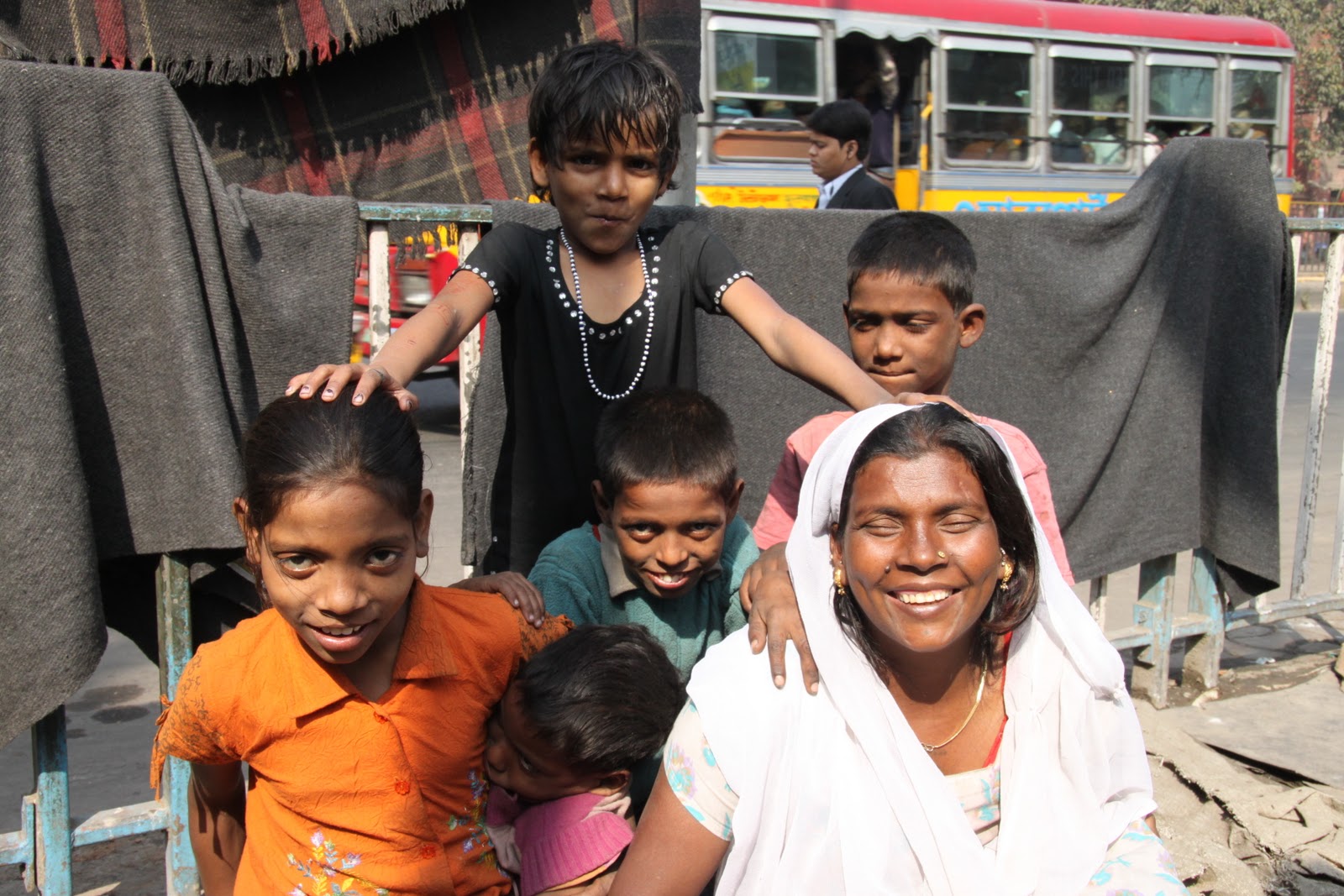
During the visits, I revealed the actual situation of ordinary Indians lives. The whole family, usually more than 6 members live together in tiny rooms (20 sq. meter on average), with shared kitchen and toilet with their neighbors. In the bedroom, there is only one bed, parents always let their kids sleep on the bed while they lay on the floor or under the bed. These kind of small flat rent about 600-1000 rupees per month, but the average family monthly income is just around 3000 rupees. That is not the worst cases, I also witnessed the street families, who are living just under a shelter of cloths and wooden planks. I thought they would be embarrassed and felt insulted when I visited them, however, they still carry smiles and didn’t look as desperate as I thought. Maybe that is the optimistic we should learn.

Concerning about the educational system, there are also divided into kindergarten, primary (Class 1-4), secondary (Class 5-10), high school (Class 11-12) and then college or university. Indian Government promise to provide free education until Class 10, but yet not compulsory. The reasons of parents who are not willing to send their kids to schools are either they cannot afford the extra cost or require them to work. The former reason is more reasonable as there are not much child labour within cities. So, what are the extra costs? Uniform, textbooks, stationeries, extra-curricular activities...etc., which can cost around 1500-2000 rupees per year. Although you will say it can be covered by a monthly family salary, you may forget he or she is not the only child!

However, one thing I found it quite ridiculous is that when the parents can afford sending their kids to formal Government school, they also send them to private tuition which costs around 200-300 rupees per month, it even add more burden to the family. They don’t think the teachers in Government school are teaching well, and the academic result reflects students taking private tuition are achieving higher marks. Therefore, it becomes a trend. I argued with Biplab that I found it quite unnecessary to attend private classes, as it doubles the learning hours in every topics which is very inefficient. “We cannot change the fact now, but in return it is also a way for NGO teacher like me to have some extra income!” Oh, that’s how Indians achieve equilibrium...

In short words, after my investigation, the education fees of one child for one year is around 1800-2000 rupees if they are studying in Government school, whereas it raises up to 5000 rupees in private school. So we are now asking 3000 rupees (US$70/ 50 Euros/ HK$500) as a minimum amount to sponsor one child. You are encouraged to donate more, just state clearly what purpose do you want to provide for your sponsored family, we will try our best to let your words reach FOCUS.

During the sponsored period, FOCUS promised to send us back the recent photos, copy of academic report or even videoes taping the progress of your sponsored kid. FOCUS will also send you the official receipt. FOCUS and I4P are both charity organization, we will not charge any administration or advertisement fees, so that 100% of your donation can reach the poor.

In my eyes, Indian children are absolutely adorable, their big eyes and chocolate-colored skin are the most impressive. Dancing and singing are really their talents, remember gangs of dancers at the background of any classical Bollywood movies (such as Slumdog Millionaire)? If you are impressed of what we are doing, or want to help kids effectively continuing their education, please support our Change a Life Children Sponsorship Program.

We hope to hear from you!

By Sean

Tuesday, 1 February 2011

Double Challenges - Corruption and Population Explosion

The rooted problems of poor living standard in India mainly due to 2 reasons: Corruption and Population explosion. In Kolkata or any other Indian cities, we can witness some very rich people driving a luxury car showing a huge contrast with the beggar lying on the street. Ridiculously, you can find a slum area right beside every magnificent tall buildings, there is only a pavement to separate the 2 sides of the Earth!!

Although India is the biggest democratic country in the world, the poor find it almost nowhere to express their needs. If you want to be a candidate in the election, you have to pay a large sum of money to the Government before you get on board. And those candidate only give little benefit to the poor in order to get their vote, after that everything become false promise. That’s why the situation remains the same for several decades, the poor remains poor but the rich become even richer. Unbelievably, there are some Indians think that it is necessary to keep the poor within their society, http://in.finance.yahoo.com/news/The-Art-Remaining-Poor-yahoofinancein-2975194193.html?x=0 . Yes, even in Hong Kong we can see some poor people, it happens anywhere; however what is the purpose of remaining such a huge difference? Obviously, rich people do not want to share with the poor, their selfishness halt the development of whole India.

When China has operated “One Child Policy” for over 30 years, Chinese population is increasing steadily. The case in India is almost uncontrollable; there are not any policies to control their population growth. The Indian Census has just finished in 2010, everyone is still waiting for the statistics, but many people predicted India has already exceeded China to become Champion among population. More than 5 kids in a family is very common, however, it also accounts for its high infant motility rate. Parents could not afford to raise all their kids, most of them are suffered from malnutrition and starvation. When I was in Hampi, I volunteered in a local NGO “Hampi Children Trust (HCT)” who provides after school tutorial and 2 meals for poor children. Once I asked a girl in HCT whether she got siblings, and she said she has a sister but died. I could not find any sadness on her face at that moment, maybe “Infant motility” is nothing special for them. And some Indians even told me, “having more children is a gift from their God, and they believe God help to raise all of their kids.” I could not argue with their faith, but isn’t it that hard to have a little planning or precaution before having sex?

Maybe you can also discover other problems, such as human trafficking, unfair trading, HIV matters…but they all trace back to the above two main problems. Let’s do something NOW to make a little change!!

Tuesday, 18 January 2011

Vision and Missions


Impact For Peace” is set up with the hope to gather enthusiastic volunteers from all walks of life and around the world to work for the empowerment of Child and Woman’s rights.  Based in Hong Kong, we take special advantage of the access to a variety of talents and professionals and wish to turn them into re-distributable human resources for overseas NGOs’ use. Initially we would pioneer projects to enhance education opportunity in the Central Asia region because we believe it is the key to uplifting long-term standard of living in this neediest region.

We aim to establish a close working tie with Central Asian medium-to-small scale NGOs on the following project initiatives:
1.      Family and children sponsorship program
2.      Scholarship scheme for talented students
3.      Micro-finance loan
4.      Vocational training for women

Basically the projects would be realized by human potential re-distributed from wherever the excess is, through:
1.      Service learning students’ summer camps that put university students’ potential into use abroad
2.      A talents matching platform that bridges aspiring individuals or those in sabbatical or retirement with overseas NGOs where their talents are most coveted
3.      Coordination of and fundraising for projects in joint effort with overseas NGOs

Striving to be accountable to our supporters, we believe it is utmost important to ensure our partnering overseas organizations are reliable.  Therefore we only work with those we have garnered thorough understanding after careful investigation.  Through time, we hope to translate our accumulated experience into an archive that documents the successful stories and contacts of those often underpublicized overseas medium-to-small size NGOs.  The archive will intend to serve worldwide volunteers-to-be who are looking for meaningful voluntary experience with true impacts in the underprivileged worlds, especially in Central Asia.  Travel with a reason to make a difference!
Teaching children English songs

By the way, if you have ever volunteered outside your home countries and have a wonderful and worthy experience, please do share with us !  Because words of mouth would be very helpful for us to identify the really reliable and effective organizations to match with our enthusiastic and warm-hearted volunteers, or even special project funding!  No matter where the NGOs are located and serving, all are welcome!!

By Sean and Charlotte